
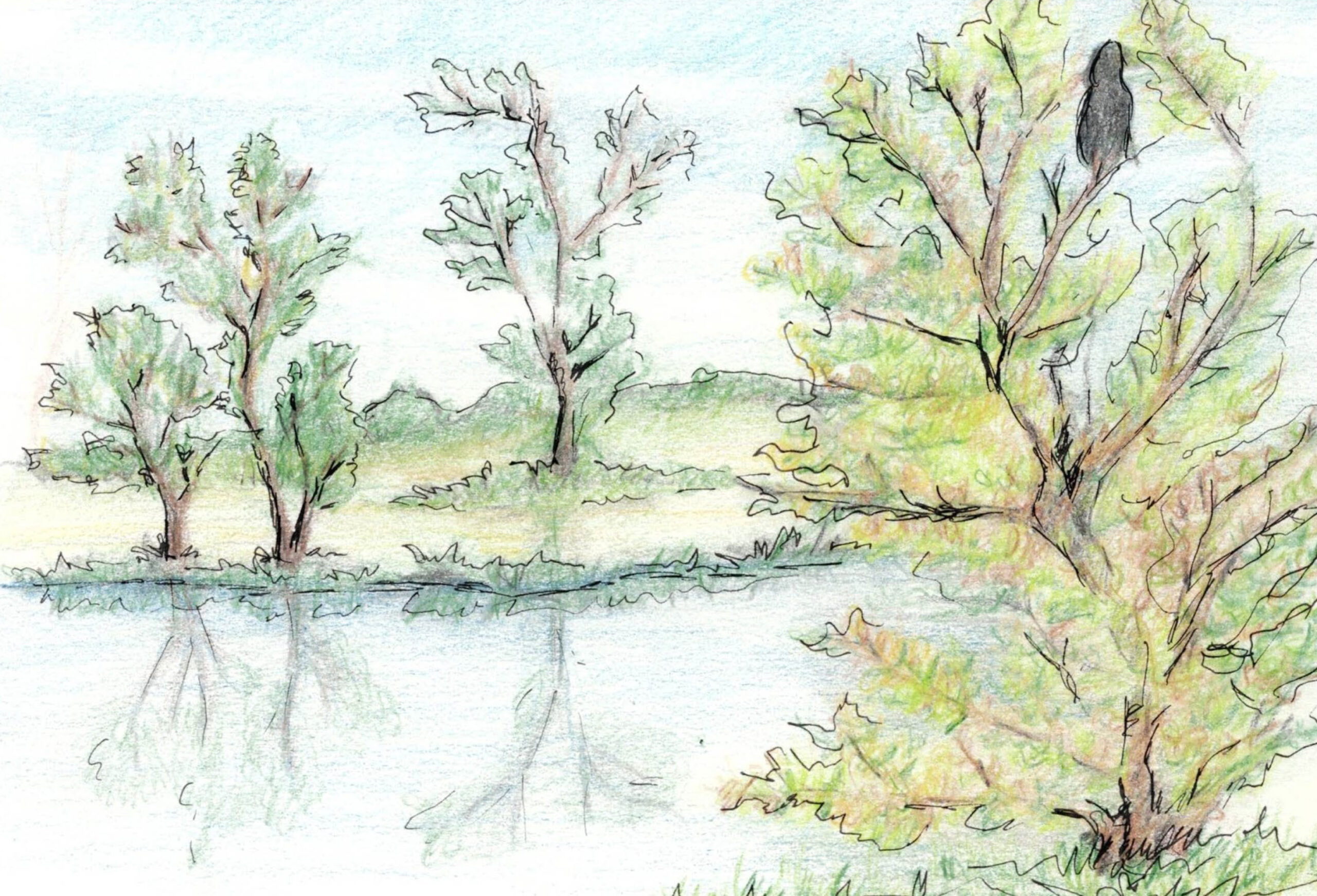
Carmen Cziko
Interior Architecture & Design / Bachelor of Fine Arts (BFA)
School of Landscape Architecture
Observations of Duct Pond in Dixon, California
The Duck Pond is a combination of plant communities with patterns observable from the center outward. The inner ring revolves around the shallow but permanent water table. Tall reeds, cattails, and bulrushes grow in patches around the water table, preventing erosion and extreme runoff. These plants adapted well, considering that the soil in the wetlands was washed away. These plants also form a defined edge separating the inner ring of the marsh from the next transitional geological zone of wetland meadows, growing in depressions between the center marsh and the rest of the wetland ecosystem. The soil in this area is constantly moist, or water levels are just at soil levels. This zone contains most sedges and tall grass, creating a corridor with lots of coverage for birds and insects. The next transitional zone is the wet prairie, containing most flowering blooms. Vegetation grows in mosaic clusters sprinkled throughout, depending on the soil. In this zone, the soil varies from moist to dry, resulting in patches of vegetation. The next composition of vegetation or zone is a swamp. At the Duck Pond, this is replaced by wooded trees, fragmented around the area. The main trees are valley oak, blue oak, and other tree types. The soil here is dry most of the year. These trees have adapted to a minimum water intake and drought for most of the year.
Faculty Lee Ann Toney
Work
View Student Work as a:
List
Grid
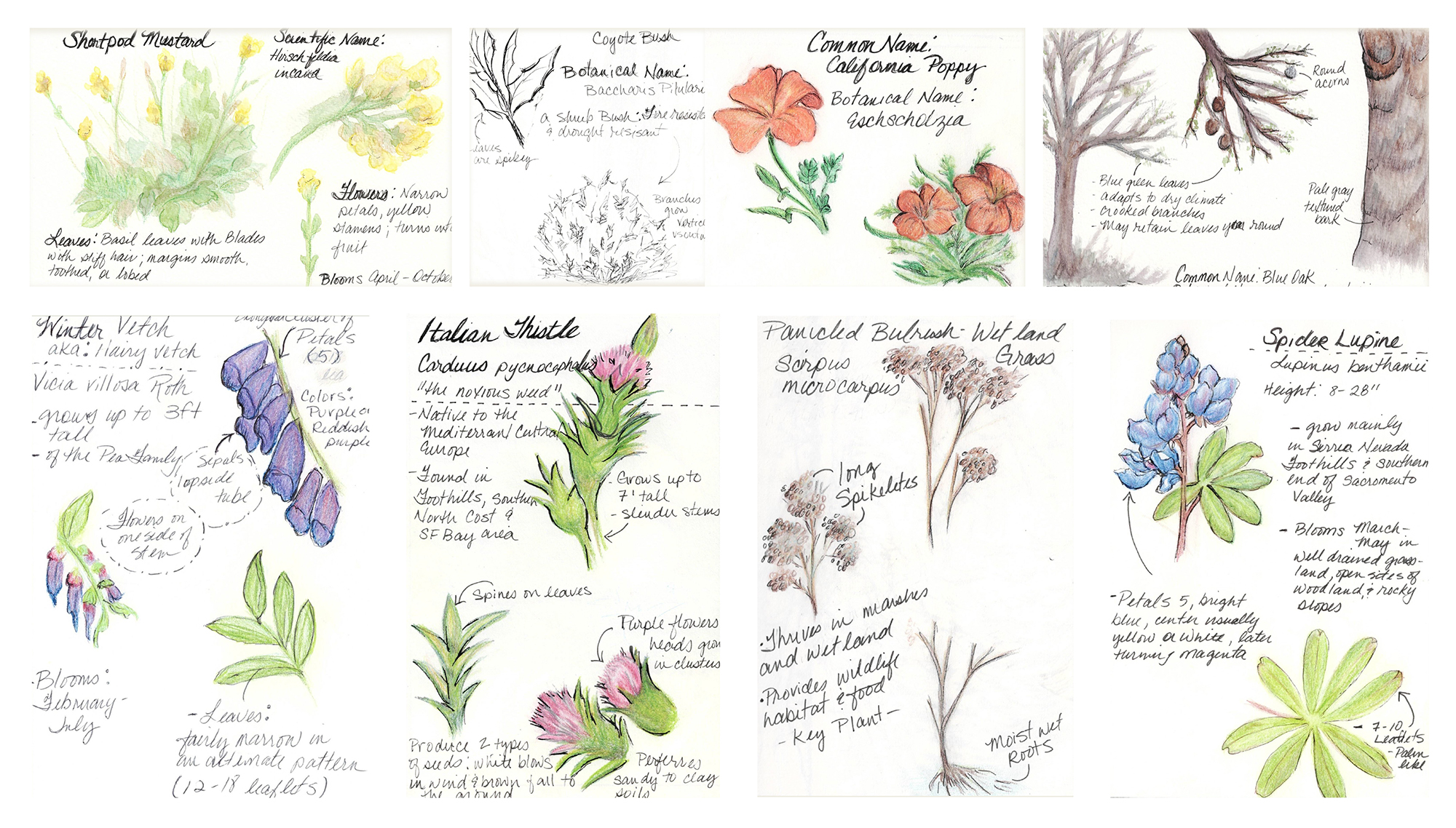
Site Visit Sketches of Plant Community
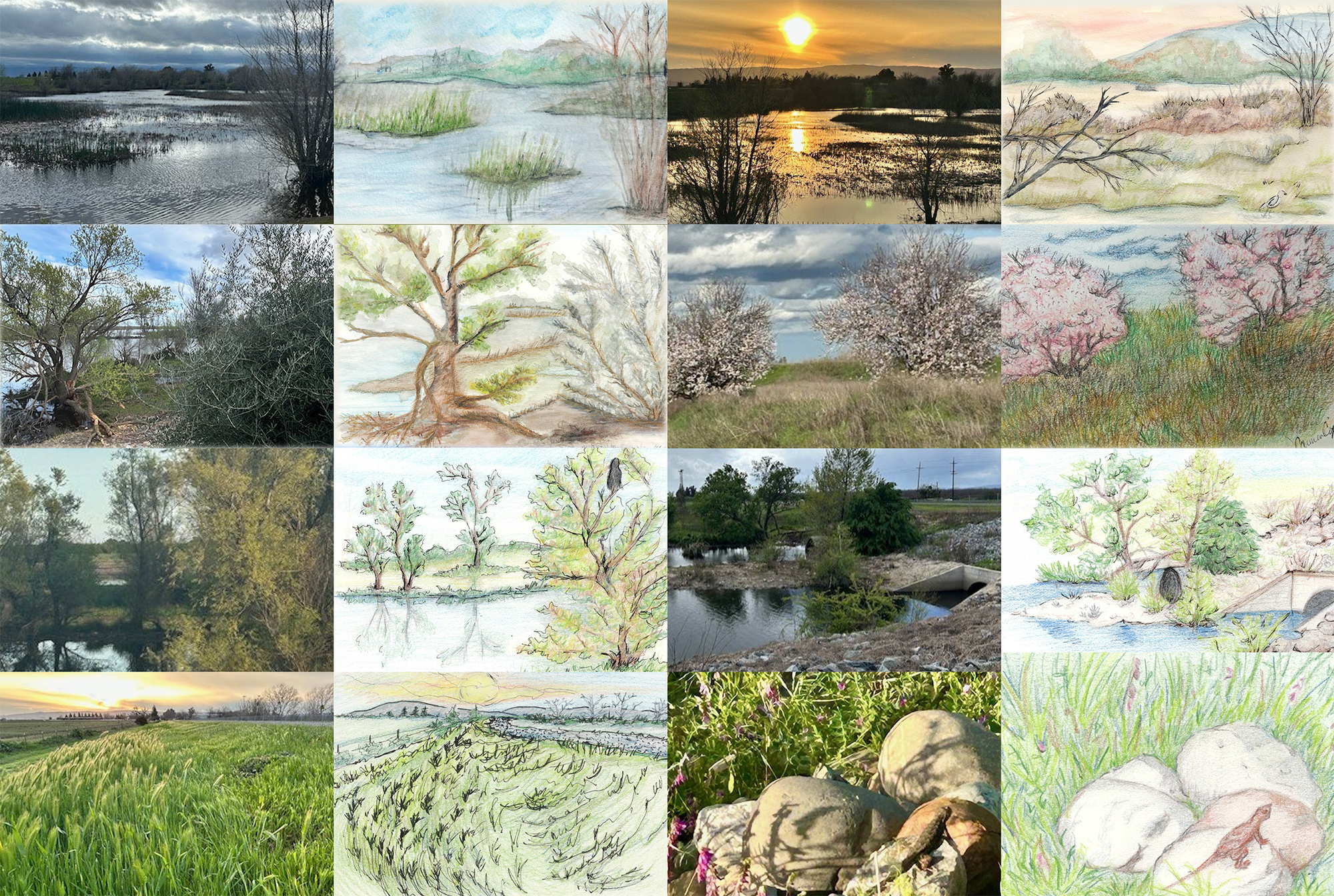
Site Visit Sketches of Landscape Scenery
View Student Work as a:
List
Grid
